

Richard Du Cann
Art of the Advocate
Rs. 1,600
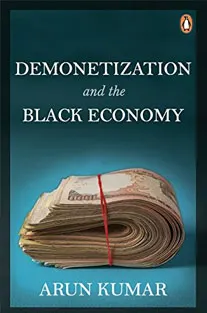
Arun Kumar
Penguin Books
The book
On 8 November 2016, the prime minister announced the immediate cancellation of all
Rs 500 and Rs 1000 denomination notes, wiping out 86 per cent of the currency in
circulation. India’s well-functioning economy went into a tailspin.
This move, it was claimed, was made to wipe out corruption, deter the generation of black
money, weed out fake Indian currency notes and curb terrorism. Overnight, people in India realized that the cash in their pockets had no value. A window of fifty days was granted to 1.3 billion people to convert their old notes into new ones.
Businesses, especially in the unorganized sectors, came to a grinding halt. Patients in hospitals faced huge problems, farmers had difficulty buying inputs, weddings were scaled down, and fishermen watched their catch rot. Many lost their jobs and could not support their families.
A year later, the RBI announced that 99 per cent of the old currency notes had been deposited with
it. India continues to grapple with the effects of this move. The black economy has not been
dented; counterfeiting and terrorism continue; the credibility of the RBI, banks and currency is
damaged; the accountability of the Parliament and the prime minister has been eroded; and the social divide
has widened. There have been many arguments and counter-arguments from both sides, but they have
missed the complete picture.
Demonetization and the Black Economy, for the first time, lucidly explains the story
of demonetization along with its effects on the economy.
Arun Kumar is the country’s leading authority on black economy and has written, studied and lectured extensively on the subject for nearly four decades. He studied at Delhi University, Jawaharlal Nehru University (JNU) and Princeton University, USA, and taught economics at JNU for three decades till 2015.
His areas of interest include public finance, development economics, public policy and macroeconomics. Kumar has written widely on these subjects, both in the popular press and for academic journals. At present, he is the Malcolm S. Adiseshiah Chair Professor at the Institute of Social Sciences, New Delhi.
Details
Same publisher
Richard Du Cann
Rs. 1,600
John Pritchard
Rs. 9,500
Marcel Berlins & Clare Dyer
Rs. 1,280
Chitra Banerjee Divakaruni
Rs. 1,400
Rs. 720
Patrick French
Rs. 3,000
Kim Edwards
Rs. 1,750 Rs. 1,200
Ken Follett
Rs. 1,280
Abha Dawesar
Rs. 1,120
Daniel J. Levitin
Rs. 1,995
Richard Ruland, Malcolm Bradbury
Rs. 2,200
Ru Freeman
Rs. 2,600 Rs. 1,600
Same shelf
Peter Robinson
Rs. 1,995
Robert H. Frank
Rs. 800
Branko Milanović
Rs. 3,560
Don Tapscott, Anthony D. Williams
Rs. 2,600
Rs. 400
Thomas L. Friedman
Rs. 2,200
Rs. 295
Daniel Goleman
Rs. 3,400
Thomas Piketty
Rs. 4,000
Rs. 2,600 Rs. 1,600
Benjamin Graham
Rs. 1,280
Raghav Bahl
Rs. 800
Rs. 800