
Rachana Sharma
History and Law Relating to Human Rights
Rs. 1,432
DR MK Sahu
Satyam Law International
The prime object of criminal law is to protect society against criminals and law-breakers. For this purpose the law holds out threats of punishments to prospective lawbreakers as well as attempts to make the actual offenders suffer the prescribed punishments for their crimes. Therefore, criminal law, in its wider sense, consists of both the substantive criminal law and the procedural (or adjective) criminal law. Substantive criminal law defines offences and prescribes punishments for the same, while the procedural law administers the substantive law. The golden rule in the criminal justice is that, “it is better that a thousand or even a million guilty persons should escape than that one innocent person should not suffer.” The criminal justice system is based on the principle that the prosecution is forced to prove the guilt of the accused beyond any reasonable doubt. However, no such burden is placed on the accused to prove his innocence. He has to rebut the accusations only. For most of the offences, the law prescribes the maximum sentence but not the minimum. Power, consequently, is bestowed upon the judicial officers to impose a suitable sentence in the light of the facts and circumstances of the individual case. What has to be ensured is that the discretion, which must in the very nature of things be granted to judicial officers, for this purpose is exercised in a proper, judicious manner and that is not allowed to degenerate into some kind of caprice and arbitrariness. This is a standard text book which deals with the penal system beginning from the ancient times in India to modern penal administration. In the present book, it has been elaborately discussed that even though the punishment has been the mainstay of handling and controlling crime but, over the periods, the philosophy of punishment has undergone drastic changes and modifications.
The book
The prime object of criminal law is to protect society against criminals and law-breakers. For this purpose the law holds out threats of punishments to prospective lawbreakers as well as attempts to make the actual offenders suffer the prescribed punishments for their crimes. Therefore, criminal law, in its wider sense, consists of both the substantive criminal law and the procedural (or adjective) criminal law. Substantive criminal law defines offences and prescribes punishments for the same, while the procedural law administers the substantive law. The golden rule in the criminal justice is that, “it is better that a thousand or even a million guilty persons should escape than that one innocent person should not suffer.” The criminal justice system is based on the principle that the prosecution is forced to prove the guilt of the accused beyond any reasonable doubt. However, no such burden is placed on the accused to prove his innocence. He has to rebut the accusations only. For most of the offences, the law prescribes the maximum sentence but not the minimum. Power, consequently, is bestowed upon the judicial officers to impose a suitable sentence in the light of the facts and circumstances of the individual case. What has to be ensured is that the discretion, which must in the very nature of things be granted to judicial officers, for this purpose is exercised in a proper, judicious manner and that is not allowed to degenerate into some kind of caprice and arbitrariness. This is a standard text book which deals with the penal system beginning from the ancient times in India to modern penal administration. In the present book, it has been elaborately discussed that even though the punishment has been the mainstay of handling and controlling crime but, over the periods, the philosophy of punishment has undergone drastic changes and modifications.
Details
Same publisher
Rachana Sharma
Rs. 1,432
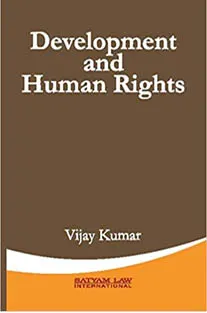
Vijay Kumar
Rs. 1,432
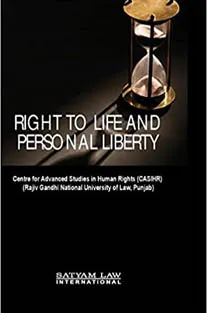
CASIRH
Rs. 920
Dr A M Krishna
Rs. 1,920
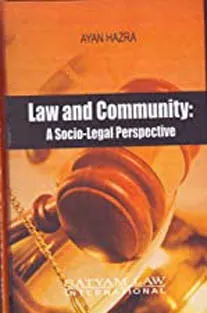
Ayan Hazra
Rs. 1,150
G K Goswami
Rs. 1,150
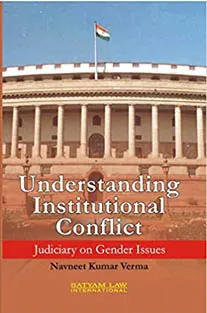
Navneet Kumar Verma
Rs. 1,150
Salman Khurshid
Rs. 1,150
Lokendra Malik, Anjum Hassan
Rs. 1,150
Same shelf
Hellen Fenwick & Howard Davis
Rs. 3,200
Suman Gupta
Rs. 3,200
Darren A Wheeler
Rs. 17,250
Ram Prasad Shrestha, Ganesh Prasad Subedi
Rs. 495
A Lakshminath, Momanduri S Murty
Rs. 1,400
Lesley-Anne Cull & Jeremy Roche
Rs. 3,040
The Lord Woolf, Jeremy Woolf
Rs. 6,500
Peter R Baehr
Rs. 7,500
Paul Denham
Rs. 4,995
Helen Fenwick
Rs. 10,500
Col. V Katju, Justice Markandey Katju, Dr Harish Bhalla
Rs. 3,200
Subhash Chandra Singh
Rs. 1,200
Rs. 1,920× 3